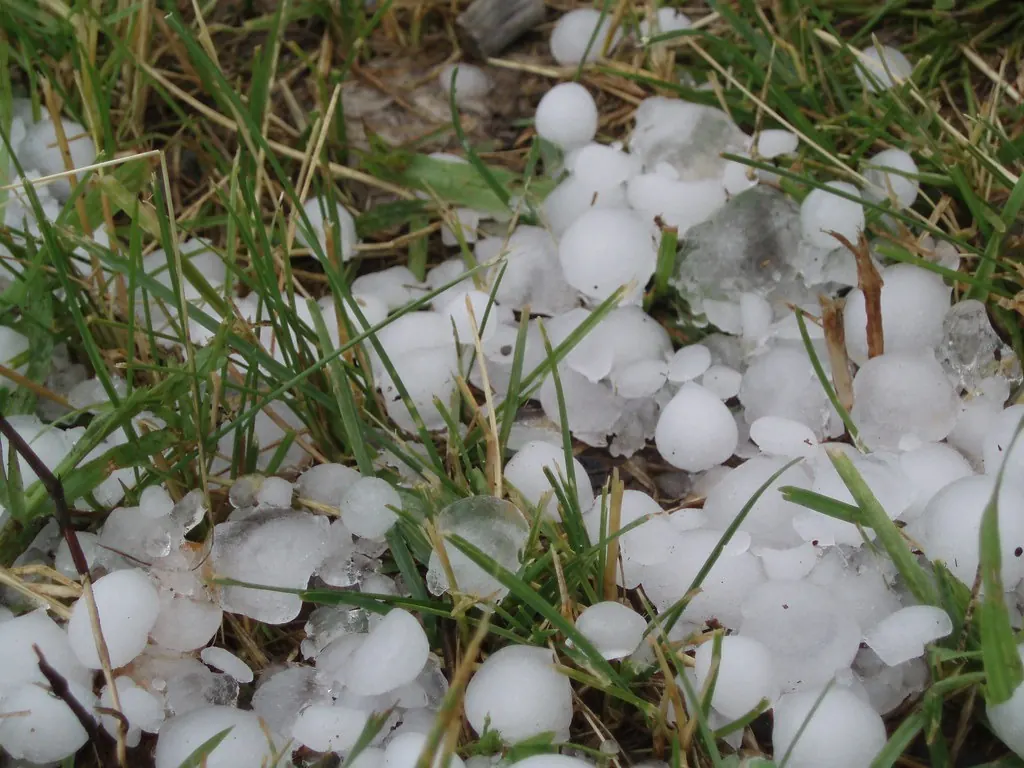
Why roofs end up in appraisal
Hail damage appraisal in Ohio usually begins with a short adjuster visit and a repair estimate covering a few slopes. The homeowner’s roofer sees bruised shingles on every face of the roof. Both sides agree hail fell; they disagree on how much of the roof it ruined. That is a classic amount-of-loss question and a good fit for appraisal.
Hail falls in every Ohio region, from the flat farmland around Lima and Findlay to the Akron and Canton suburbs and the Miami Valley. A single spring line of storms can mark thousands of roofs in an afternoon, and the adjusters who follow are often working dozens of claims a day. Under that pressure, inspections get shorter, ladders don’t go up every slope and soft metals — the clearest record of hail size and direction — go unphotographed. Our approach is slower on purpose: we inspect every face of the roof, read the soft metals, check the north and west elevations where storm-driven hail usually lands hardest and build the scope from what the house actually shows. That record is what the appraisal panel ends up relying on.
Roofing materials we see across the state
Asphalt shingles
The majority of Ohio homes have asphalt. The disputes are about test-square counts, granule loss versus manufacturing defects and whether discontinued shingles can be matched after a partial repair.
Slate
Slate is common on older homes and churches in Cleveland Heights, Granville, Cincinnati’s hilltop neighborhoods and small-town Ohio. Hail can fracture slate or knock corners off, and repair requires skilled labor that most estimating programs underprice. Salvaged slate that matches the original color and size can be scarce.
Metal
Standing-seam and exposed-fastener metal roofs are common on farm buildings in northwest Ohio and newer homes statewide. The fight here is functional versus cosmetic damage.
Functional versus cosmetic damage
Some Ohio policies now carry a cosmetic-damage exclusion, especially for metal roofs. These endorsements commonly exclude dents that don’t affect the roof’s ability to shed water. Whether a given dent is “only cosmetic” is a factual question, but whether the exclusion applies at all is a coverage question. Read the endorsement carefully, and if the carrier relies on it to deny the claim, talk to an Ohio attorney.
What we document
- Hail strikes per test square on each slope, with chalk-marked photos
- Collateral damage: gutters, downspouts, vents, window wraps, siding and AC fins
- Roof measurements, pitch and waste factors — see our roof area and pitch calculator
- Product identification and availability for matching
- Decking, underlayment, drip edge and ice-barrier code items
Deductibles that change the math
Some Ohio policies carry a percentage wind/hail deductible, often 1%–5% of the dwelling limit. On a home insured for $300,000 (illustrative), a 2% deductible is $6,000 before the carrier pays anything. Run the numbers with our percentage deductible calculator before deciding whether appraisal is worth the cost.
Next steps
If you’re unsure how far apart the estimates really are, start with an estimate audit. If the hail came with a tornado or straight-line wind, the tornado and windstorm appraisal page covers the overlap.
Questions about hail & roof appraisal
How many hail hits per test square justify a roof replacement?
There is no single rule in Ohio policies. Carriers often use internal guidelines, while the real question is whether the damage affects the roof’s function and whether a repair can be made with matching materials. Each slope is judged on its own evidence.
Can slate roofs be repaired after hail instead of replaced?
Often they can, if the slate is sound and matching replacement pieces are available. The cost of skilled slate labor and sourcing salvaged slate is where estimates usually fall short, so detailed pricing matters.
What is a cosmetic damage exclusion on a metal roof?
It is an endorsement on some policies that excludes dents or marks that don’t affect the roof’s ability to keep water out. Whether it applies to your claim depends on the exact wording, so read it closely and get legal advice if coverage is denied.
Does a hail claim on my roof include gutters and siding?
It should, if the same storm damaged them. Gutters, downspouts, siding, window wraps and AC units are commonly missed in a first inspection, so ask that they be inspected and included.