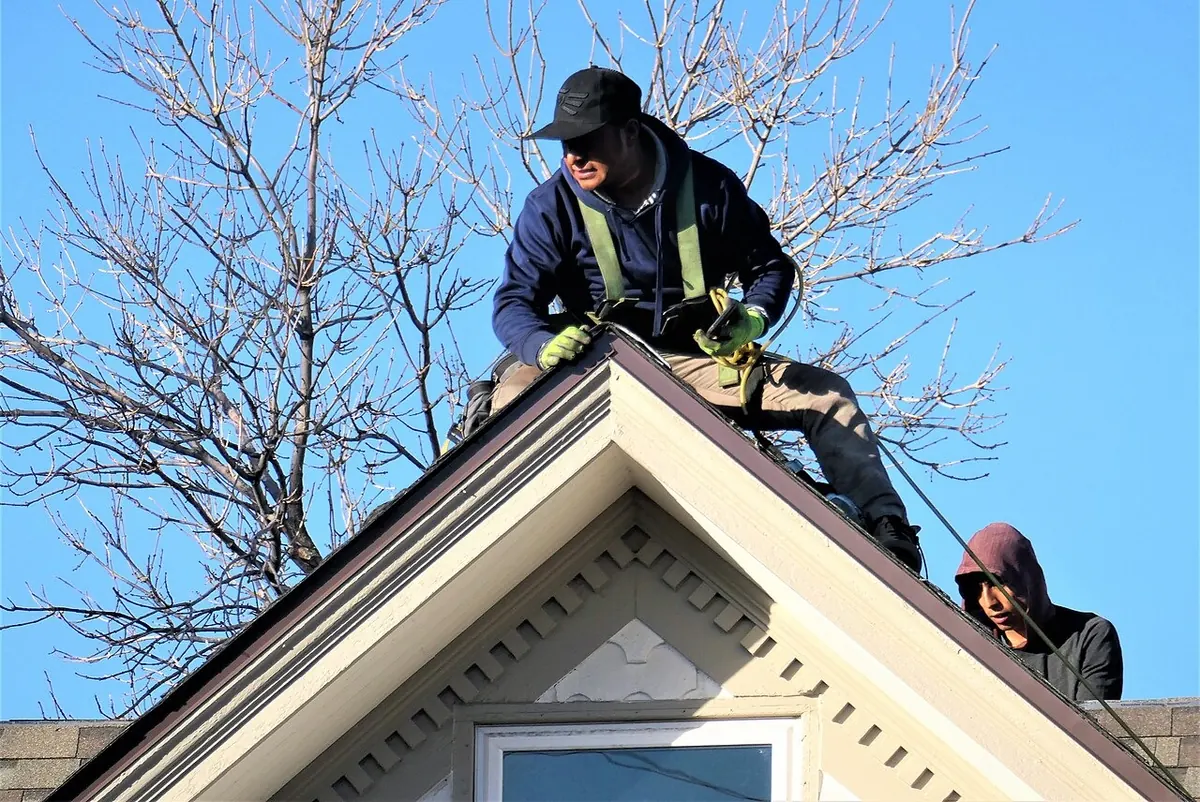
Why pitch changes everything
A roof is bigger than the ground it covers. The multiplier is √(1 + (rise ÷ 12)²). A 6/12 roof is about 12% larger than its footprint, an 8/12 roof about 20% larger and a 12/12 roof about 41% larger. Plenty of older Ohio homes — Cleveland and Cincinnati Victorians, Columbus foursquares — sit at 10/12 or steeper.
Steep and high charges
Estimating software commonly adds labor for roofs at 7/12 and steeper and for slopes two or more stories above the ground. The calculator flags both so you can look for those lines on the insurer’s estimate.
Comparing against the estimate
- Find total squares and the waste percentage in the roofing section.
- A difference of more than about 5–10% from your result is worth asking about.
- Check ridge cap, starter, drip edge, ice-and-water barrier and valleys are listed.
- Ice-and-water barrier at the eaves matters in Ohio’s snowbelt; see our ice dam appraisal page.
Footprint math is a sanity check. Roofs with several pitches, dormers or turrets need measuring plane by plane or an aerial measurement report.
Questions about this tool
What is a roofing square?
One square is 100 square feet of roof surface. Shingles are usually sold three bundles to the square.
Does this work for slate roofs?
The area math is the same for any roofing material. Slate pricing and repair methods are very different from asphalt, so use a slate contractor’s price per square if you enter one.
Why ask how many stories?
Slopes two or more stories above the ground commonly carry an extra labor charge for safety equipment and handling. The tool flags it so you can check the estimate.