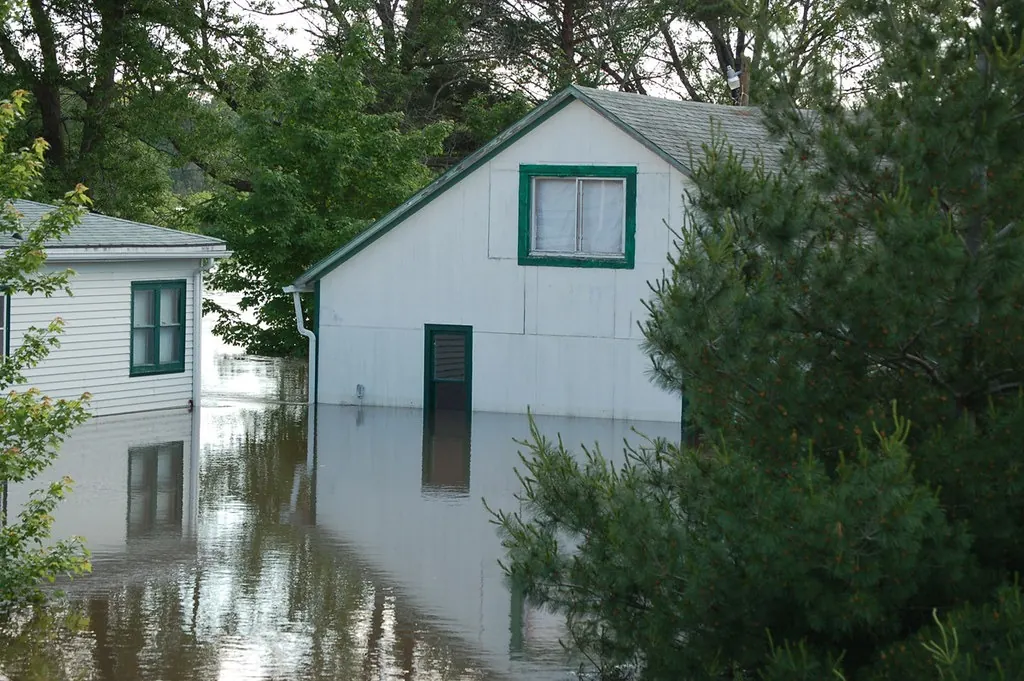
Same mess, different coverage
Almost every house in Ohio has a basement, and almost every basement eventually takes on water. From a Cleveland bungalow after a summer downpour to a Dayton split-level along a swollen creek, the cleanup looks the same: wet drywall, ruined carpet, a dead furnace blower. But Ohio basement water damage coverage depends far less on what the room looks like than on where the water came from. Insurers sort basement water into a few buckets, and each bucket is treated differently.
Sewer and drain backup
Water that comes up through a floor drain, toilet or laundry tub, or that rises because a sump pump failed or was overwhelmed, is usually treated as backup. Standard homeowners forms commonly exclude it. Coverage comes from a separate sewer and drain backup endorsement that many Ohio owners buy, sometimes without remembering they did.
Two features of that endorsement matter most:
- The sublimit. Backup coverage is usually capped at a fixed amount — for example, an illustrative $5,000, $10,000 or $25,000 — no matter how large the dwelling limit is.
- The deductible. Some endorsements carry their own deductible, separate from the main policy deductible.
A finished basement with a family room, bathroom and mechanicals can exceed a modest sublimit quickly. Our basement backup sublimit calculator shows how the cap and deductible interact.
Read the endorsement itself, not just the declarations line. Some versions exclude backup caused by flooding nearby, some cover the cost to replace the failed sump pump while others do not, and a few apply the sublimit to both building and contents combined. Those details decide what the sublimit actually buys.
Flood and surface water
Water that enters from outside at ground level — a river over its banks, runoff pooling against a foundation, groundwater seeping through walls — is generally treated as flood or surface water. Standard Ohio homeowners policies exclude it. Coverage comes from a flood policy, most often through the National Flood Insurance Program, or a private flood policy.
Ohio’s river history makes this more than theory. The Great Flood of March 1913 swamped Dayton, Columbus and Zanesville, and the 1937 Ohio River flood submerged much of Cincinnati’s riverfront. Many neighborhoods along the Miami, Scioto, Muskingum and Ohio rivers still sit in mapped flood zones. Flood policies have their own rules about basements, and they cover far less basement finish and contents than many owners expect.
Sudden and accidental water from inside
A supply line that bursts, a water heater that splits, or a pipe that freezes and cracks typically falls under the main dwelling coverage as sudden and accidental discharge — no separate endorsement and no special sublimit, subject to the policy deductible. That makes the cause enormously important. A finished basement soaked by a burst line may be covered up to the dwelling limit, while the same damage from a backed-up floor drain may stop at the backup sublimit.
Common exceptions apply. Slow leaks over weeks or months, wear and tear, and freeze damage in a vacant or unheated home are frequently excluded. Read the water and freezing sections of your policy closely.
Contents add another layer. Furniture, appliances and stored items in a basement are usually personal property, and how they are paid depends on the coverage bucket the water falls into — the backup sublimit, a flood policy’s narrow list of covered basement contents, or the main policy’s personal property coverage. Make an itemized list with photos before anything goes to the curb.
When the cause is disputed
Sometimes the answer is not obvious. Heavy rain can overload a sump and push water up through the drain at the same time surface water seeps through a foundation crack. In those cases the insurer may assign the whole loss to the least generous category.
Documentation helps either way. Before cleanup, photograph where the water entered, the high-water line on walls, the floor drain and sump pit, and the outside grade. Save the sump pump if it failed. Note the weather that day.
Where appraisal fits
Once the insurer accepts which coverage applies, the usual disagreements are about scope and price: how high drywall must be cut, whether the whole carpet or only part must be replaced, what a furnace or water heater actually costs to replace, and how contents are valued. Those are amount-of-loss questions, and they are what an appraisal panel is built to resolve. Our water damage appraisal service covers basements, backups and sudden-discharge losses across Ohio.
For definitions of terms like sublimit, endorsement and mitigation, see the appraisal lexicon.